Tag Archives: water quality

Beneath the Surface: Biological Sampling on the Lower Esopus

Last week, local volunteers teamed up with Hudsonia to collect aquatic macroinvertebrate samples and conduct habitat assessments at two sites along the Lower Esopus Creek in Hurley and Marbletown. Guided by Dr. Kristi MacDonald (Executive Director & Science Director at Hudsonia, Ltd.) and Dr. Bob Schmidt (Hudsonia co-founder & Associate Director; Adjunct Curator of Fishes at the NY State Museum), the team waded into the water to get a hands-on look at what’s living along the streambed.

Benthic (bottom-dwelling) macroinvertebrates like insect larvae and nymphs often live attached to rocks, vegetation, or buried in stream sediment. Because they are abundant, diverse, and highly sensitive to chemical and physical changes, they can serve as natural indicators of stream health.

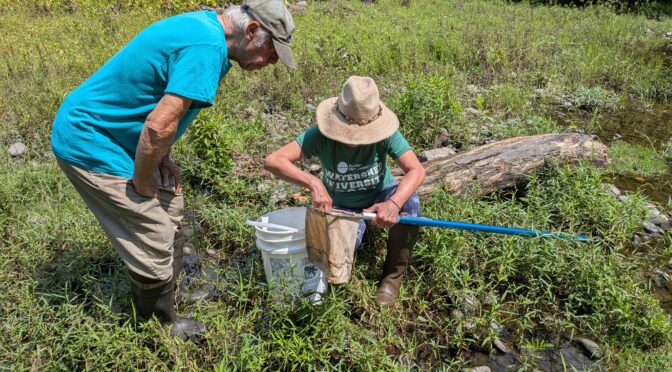
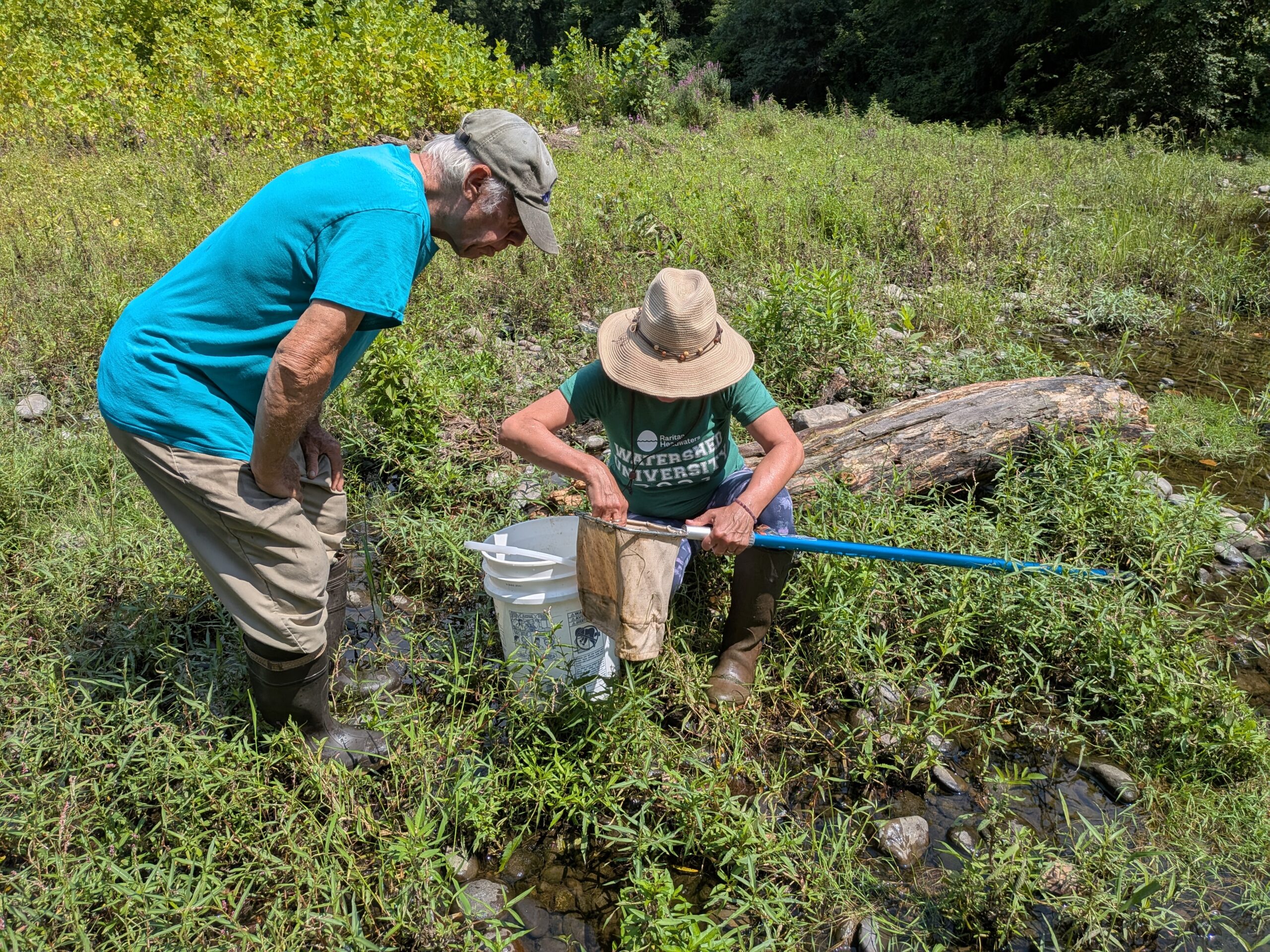
To catch these creatures, volunteers used a technique called kick-netting, disturbing the streambed with their boots so the current swept dislodged organisms into a downstream mesh net.

(Photo by Kristi MacDonald)
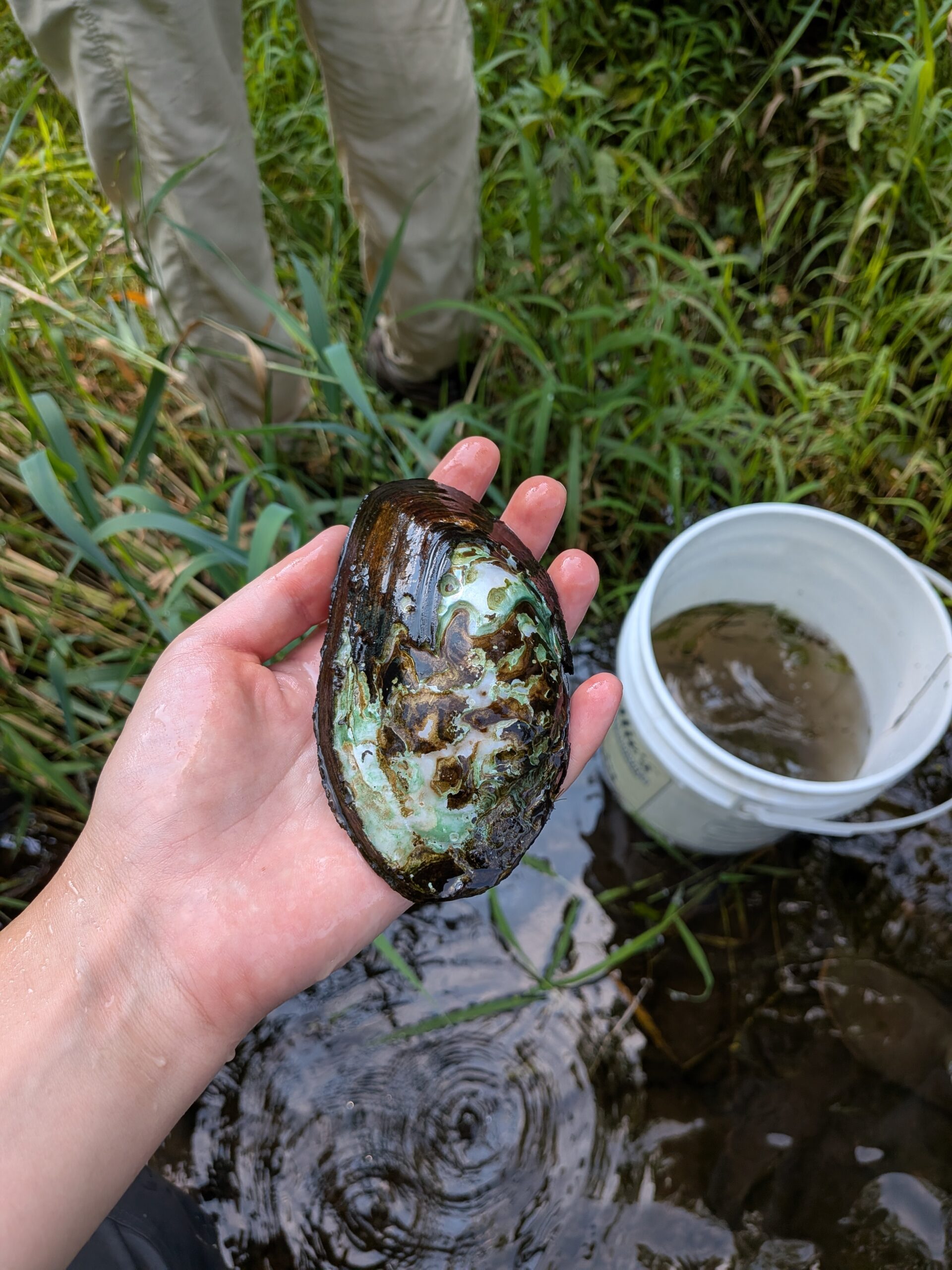
Macroinvertebrate samples were collected from a stream riffle at each site. A riffle is a shallow section of a stream where water runs quickly over rocks. They are an ideal environment for aquatic macroinvertebrates.
(Photo by Kristi MacDonald)

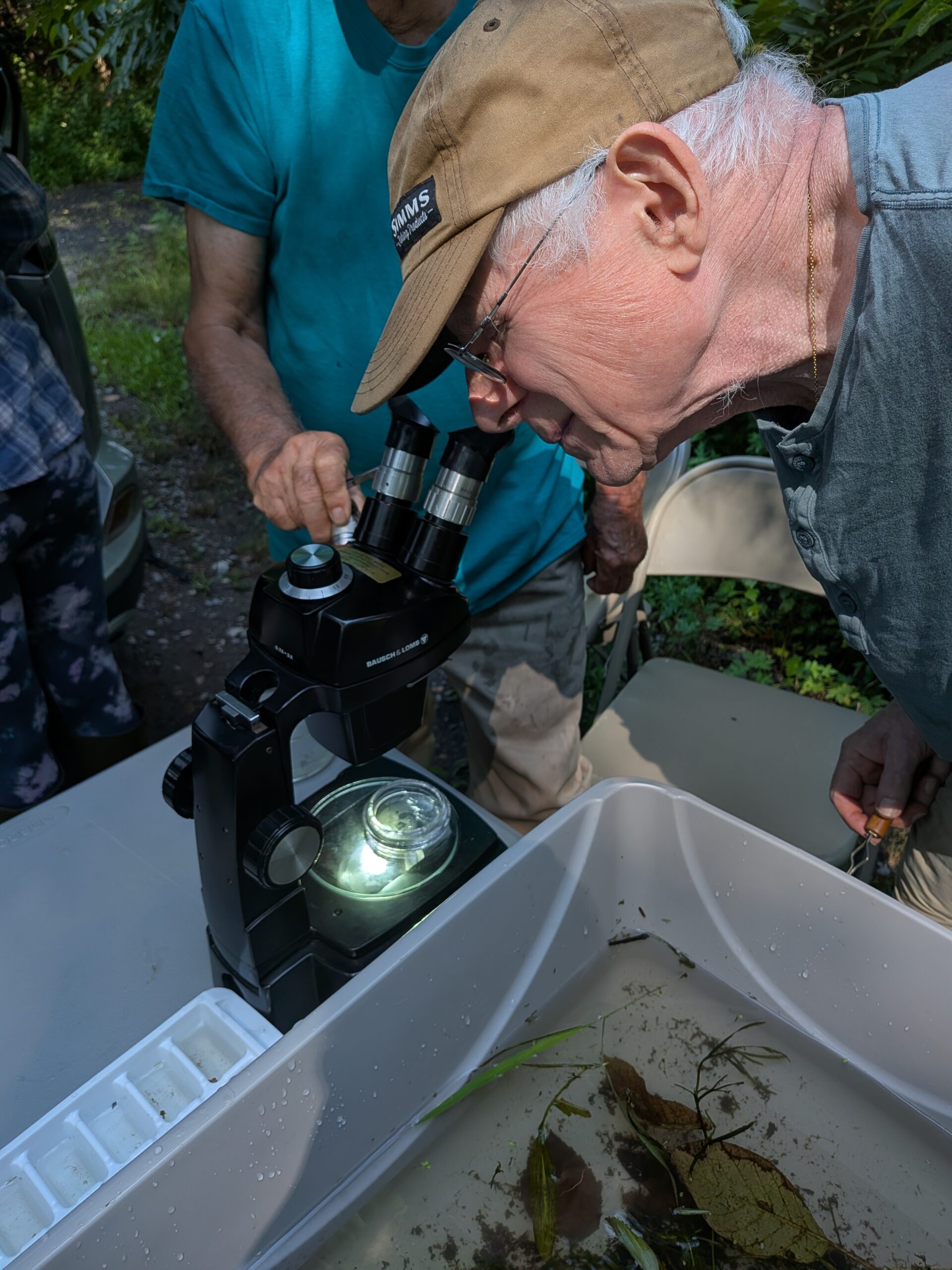
Using the New York State DEC’s WAVE (Water Assessments by Volunteer Evaluators) citizen science methodology, the team hand-sorted the catch on-site to see which animals were present or absent. Generally, a wide diversity of organisms, including pollution-intolerant species, is a sign of a healthy stream. In contrast, if sampling finds little diversity or mostly pollution-tolerant species that can signal environmental stress or poor water quality.

The team sorts the catch
(Photo by Kristi MacDonald)

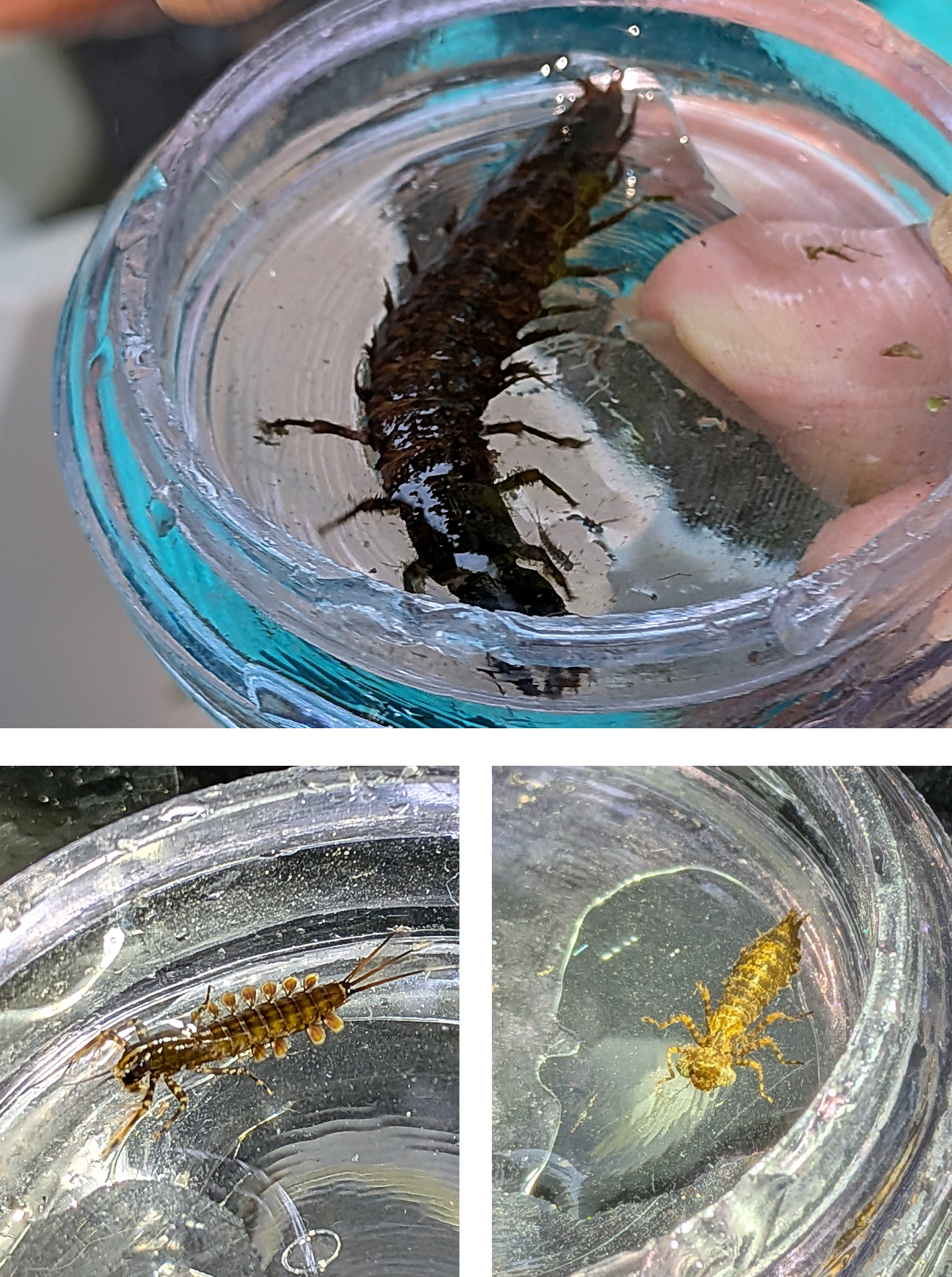
Last week’s findings included mayfly, dragonfly, and damselfly nymphs; caddisfly, black fly, and dobsonfly larvae; plus a couple aquatic snails, beetles, and worms.

These samples are now heading to a certified aquatic taxonomist for precise identification to calculate a Biological Assessment Profile (BAP) score, which quantifies stream health. The team also conducted visual habitat assessments at both sites to evaluate the local physical environment on a scale from optimal to poor.

This effort is part of an ongoing project led by Hudsonia and Manhattan University to establish a Community Stream Monitoring Program for the Lower Esopus Creek Watershed.

By gathering long term water quality data, this program will help tell the story of the Lower Esopus watershed’s health and will make scientific insights accessible to local conservation planners, scientists, and community members alike.

Get Involved!

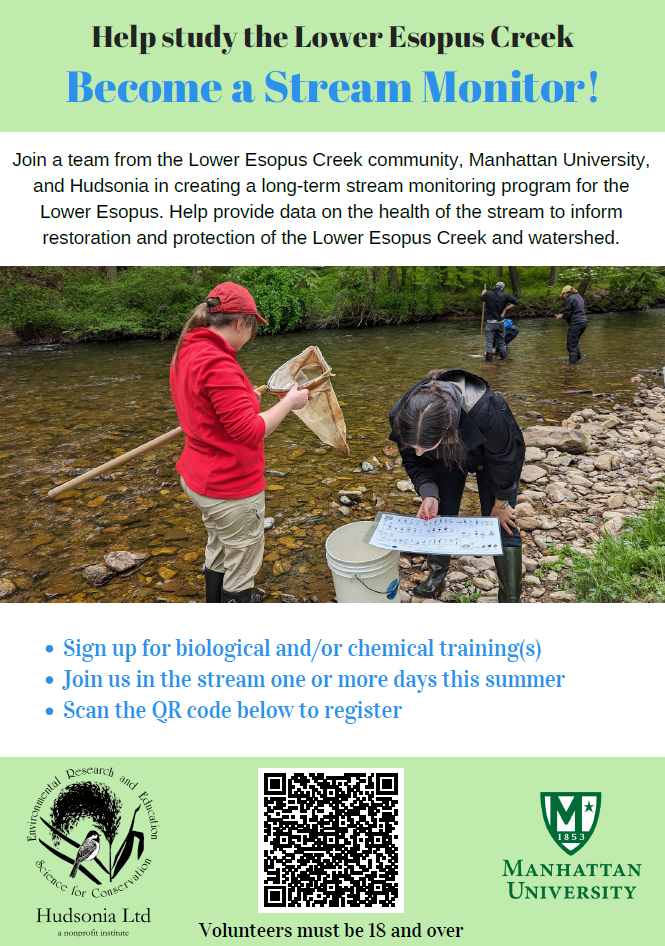
Interested in volunteering as a stream monitor? Chemical sampling will be starting soon!

You can join the effort by filling out the general interest form or reaching out directly to Kristi MacDonald at Hudsonia via email at kmacdonald@bard.edu.

Get your feet wet: Join the Lower Esopus Community Stream Monitoring Program

Local community members have a unique opportunity to dive into environmental science this summer by joining the newly launched Lower Esopus Community Stream Monitoring Program.

 Co-led by Hudsonia and Manhattan University, in collaboration with Riverkeeper and local community groups, this program will train volunteers to collect meaningful biological, chemical, and physical data along the Lower Esopus stream corridor.

 The data collected by volunteers will help inform stream restoration and protection efforts, while establishing a crucial, long-term dataset to track water quality trends throughout the Lower Esopus watershed.

 Starting this July, community members can give hands-on help through two main monitoring efforts:

Biological Monitoring: Conducted every summer, volunteers will assist with habitat assessments and benthic macroinvertebrate sampling to gauge stream health.

Chemical Monitoring: In addition to automated sensors that will track data continuously, volunteers will gather monthly water chemistry samples. Parameters will include temperature, dissolved oxygen, turbidity, pH, nutrients, chloride, and E. coli.

The resulting data will be managed by Hudsonia and Manhattan University, uploaded to U.S. Environmental Protection Agency’s WQX database, and shared with the public through online reports and public presentations.

A recording of the introductory information session and the  biological monitoring training are available to watch. Those interested in volunteering can fill out a general interest form and sign up for biological sampling.

Reach out to Kristi MacDonald at Hudsonia with questions, kmacdonald@bard.edu.